
What Is a Hologram Fan Display, and How Does It Work?
A plain-English look at the spinning-LED technology behind hologram fan displays, where businesses actually use them, and what to check before buying one.
Super Admin · 26 August 2026 · 2 min read
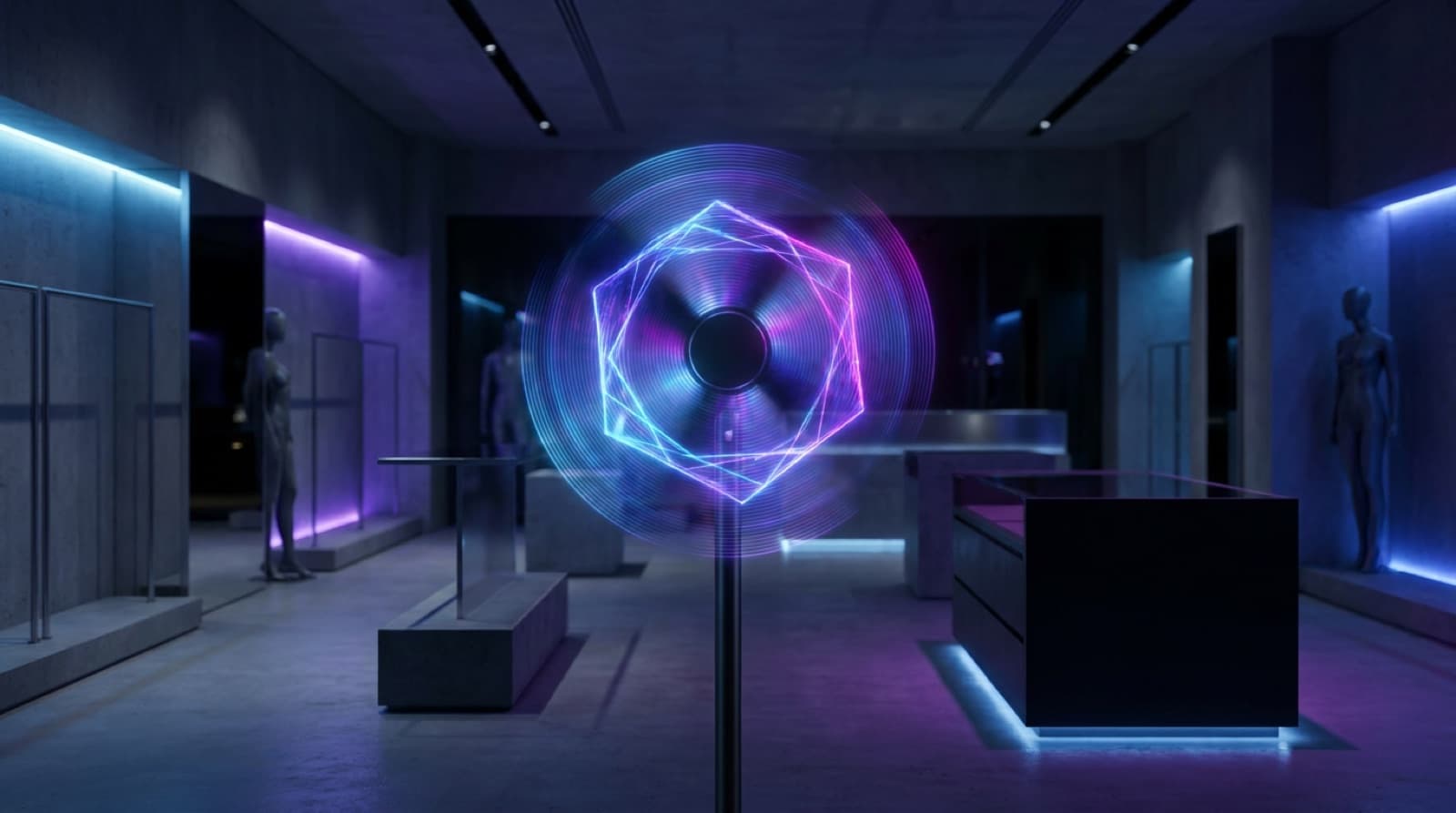
If you've walked past a shop window or a trade-show booth and seen a glowing 3D shape floating in mid-air, you've likely seen a hologram fan display. Despite the name, it isn't a true hologram in the physics-textbook sense — no lasers, no glass plates. It's a clever bit of LED engineering that tricks the eye into seeing a solid 3D image where there's actually just a spinning blade.
How it actually works
Inside the unit, one or more blades fitted with a single row of LEDs spin at high speed — usually somewhere around 1,000 to 1,500 RPM. As each blade sweeps through a full circle, the LEDs flash on and off at exactly the right moments to paint out an image, frame by frame. Do this fast enough — a few hundred times a second — and human persistence of vision stitches the flashes into a single picture that appears to float in the empty space the blade is spinning through.
Because there's no physical screen behind it, the image reads as if it's hanging in mid-air rather than sitting flat behind glass. That's the effect people usually mean when they say “hologram fan.”
Why businesses use them
The displays draw attention precisely because they don't look like a normal screen. A shopfront, mall kiosk, or exhibition stand running one stands out from every static poster and LCD panel around it. Common uses include:
- Retail storefronts pulling in foot traffic
- Trade-show and exhibition booths
- Product launches showing a rotating 3D render of the item itself
- Restaurants and showrooms running a menu or catalogue on a loop
What to check before buying one
Not all hologram fans are equal. A few things actually matter:
- Blade count — 3D-looking fans usually run 3 or 4 blades. Single-blade units are cheaper but flicker at the edges in bright light.
- Size — smaller 65cm units suit counters and shop windows; 100cm+ fans or wall arrays are built for booths and big storefronts.
- Brightness — a unit running in daylight or a lit shopfront needs far more brightness than one in a dim room.
- Content format — check what image and video formats the unit's software accepts before commissioning any artwork for it.
Get those four right and the display does the job it's bought for: making people stop and look.